|
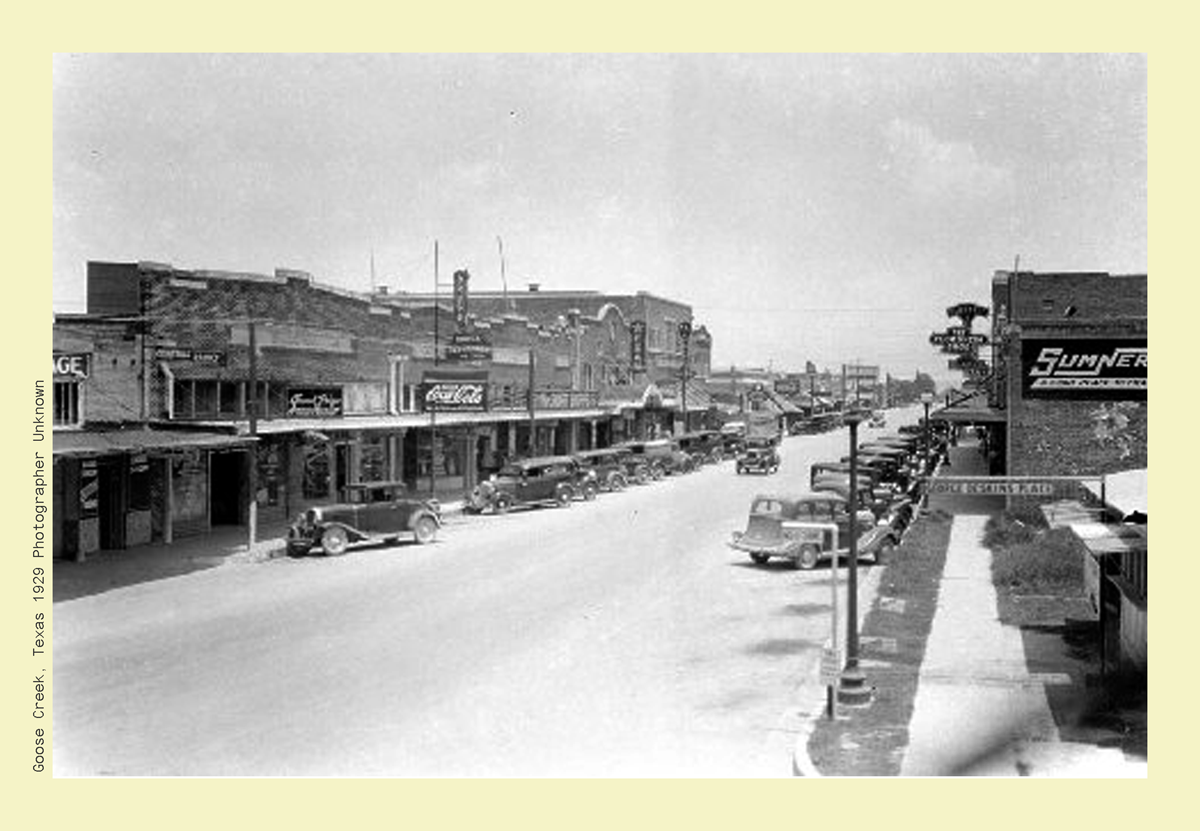
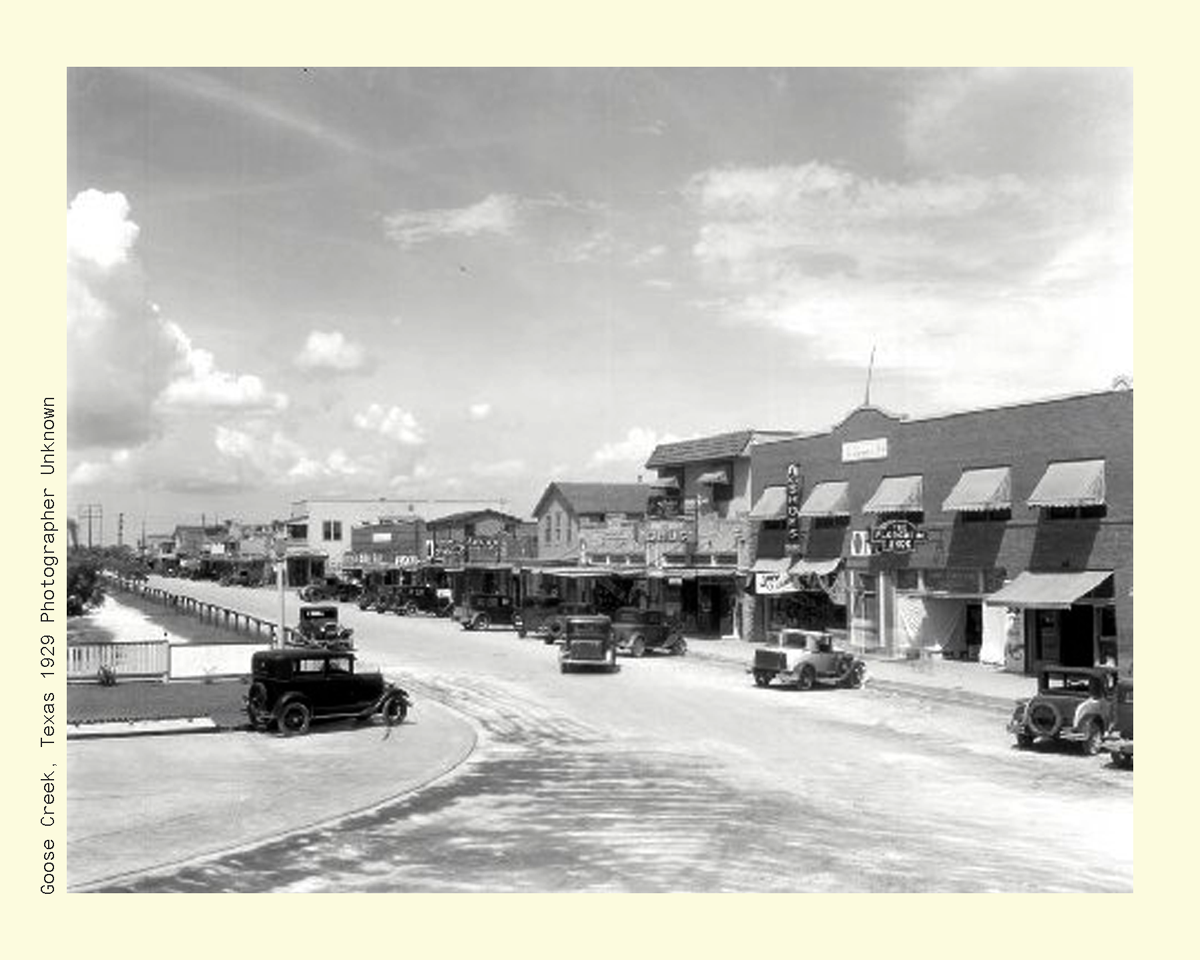
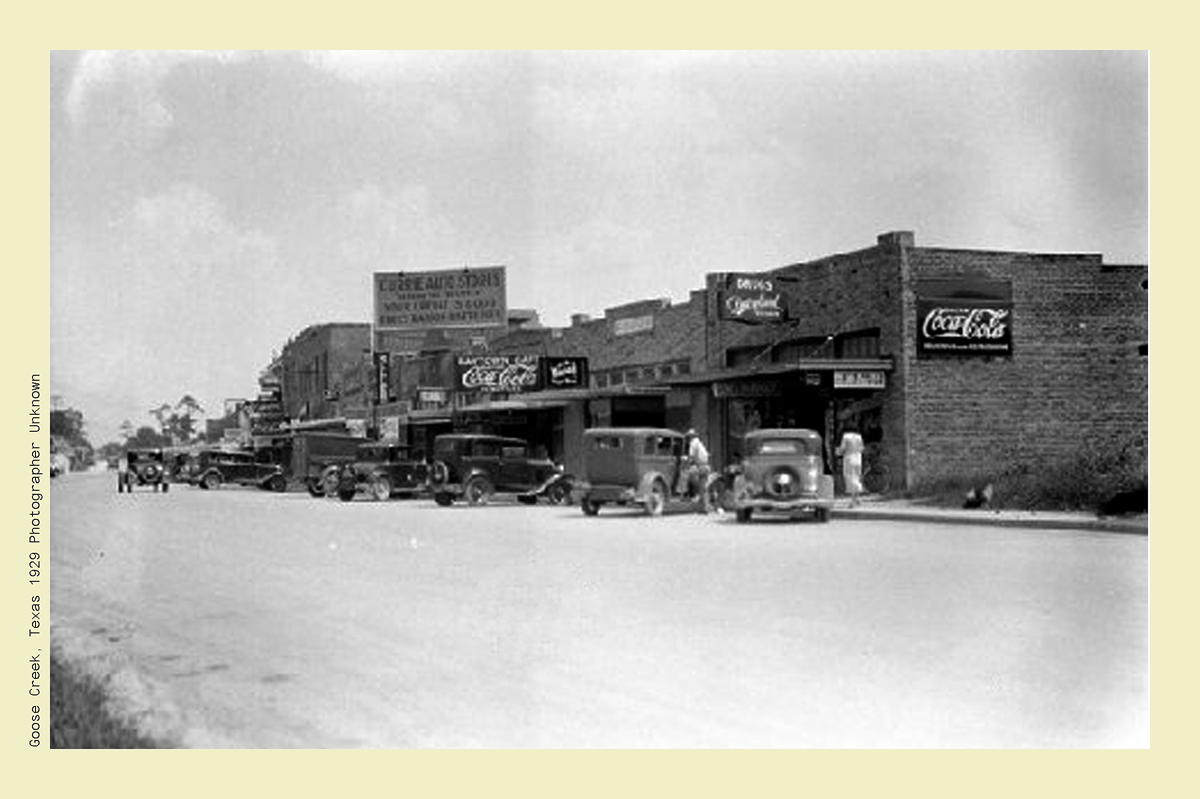
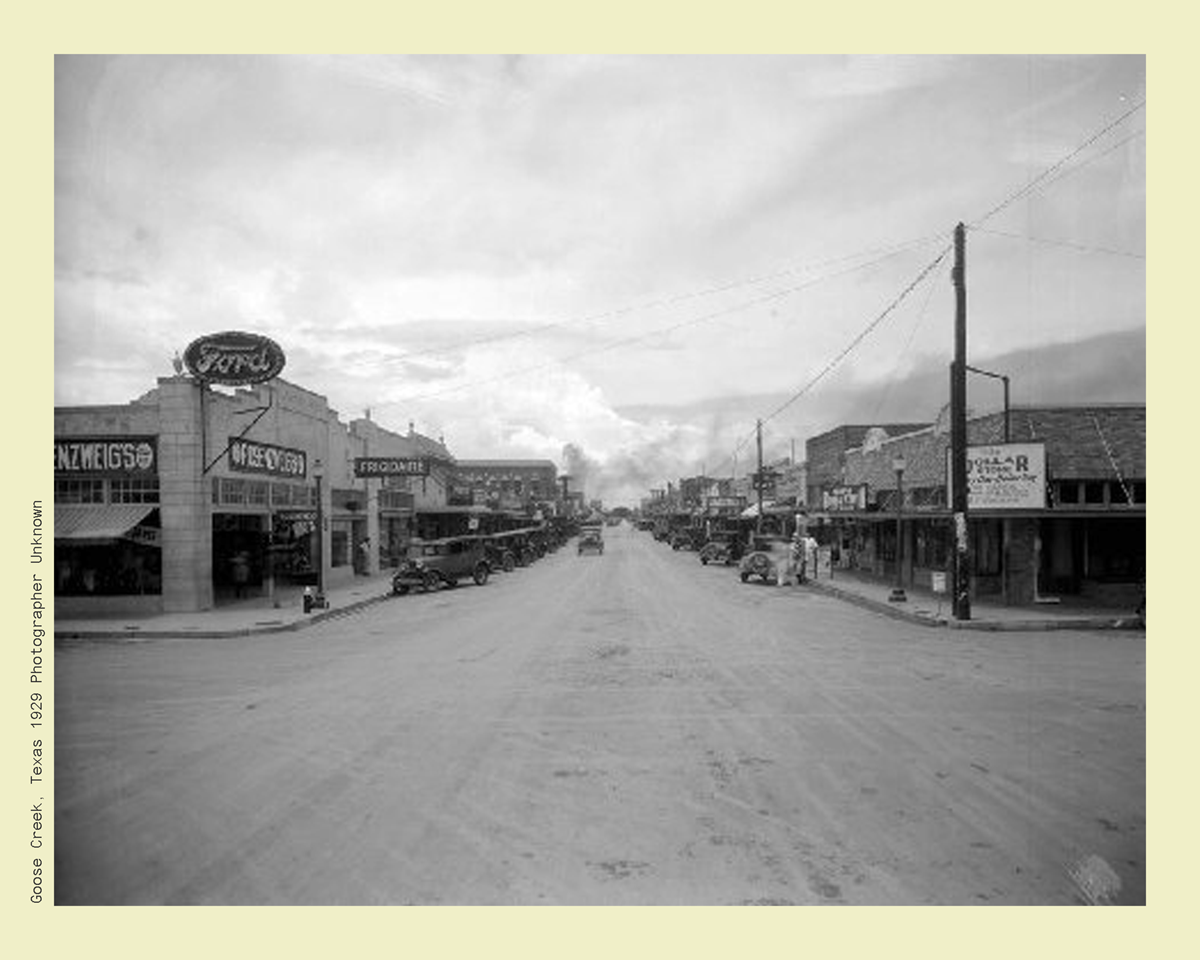
Photos donated by David
Stephens
Texas Historical Cemetery Marker - The Hill
of Rest Cemetery
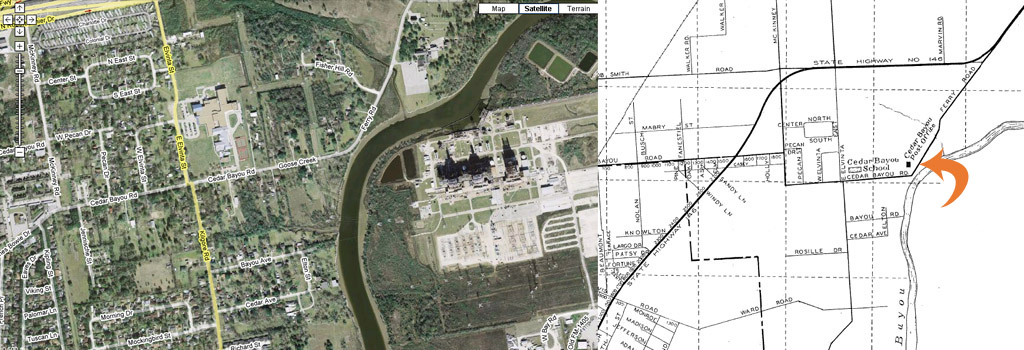
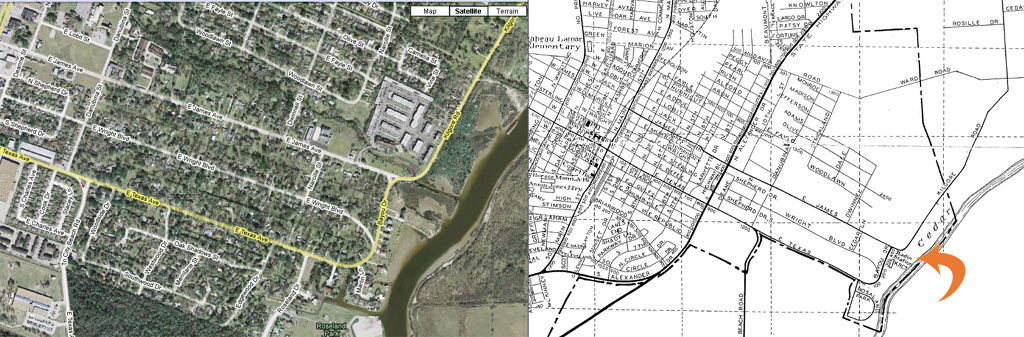
 Park Street that ran through the Humble/Exxon complex (now
closed to the public) was known as Wooster-Cedar Bayou Road.
Park Street that ran through the Humble/Exxon complex (now
closed to the public) was known as Wooster-Cedar Bayou Road.
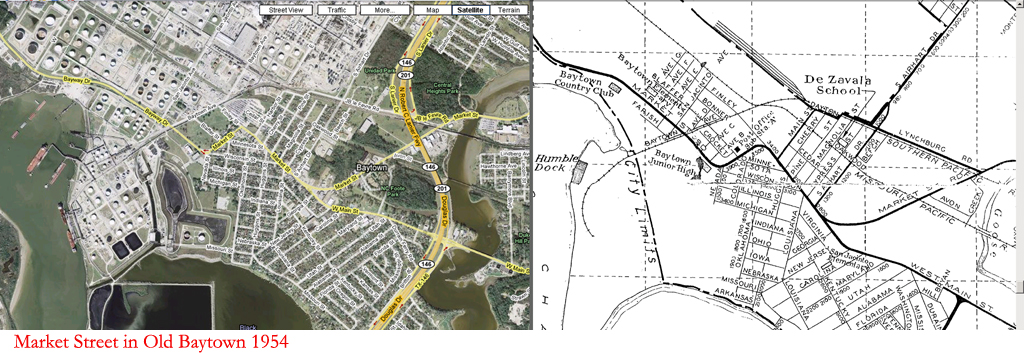
Bayway Drive was known as Market Street Road. At the
corner of what is now Park Street and Bayway Drive was a Post Office known as
Wooster Station.
Between
Wooster Street and Arbor Street on Bayway Drive as David G. Burnet Elementary
School.
In 1954 at the
corner of Decker Drive and Wade Road was KREL radio Station. The Missouri
Pacific Interurban ran past it.
 |
 |
 |
 |
|
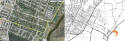
1954 Map scanned and
donated by Wendy Chaffin |
Bell Prairie was located in an area
west of the Tri-City Beach Road, between it and Tabbs Bay, and was the home
of
Smith's cousin, Henry Flavel Gillette. Research - Trevia W Beverly
The name Baytown was
chosen by Ross S. Sterling and his associates, because of the number of bays
that surrounded
the area they were developing as a refinery. The name
Baytown was first applied to the community around 1859 however
and saw its first
settlers in the 1820's.
In 1880, there was a small settlement on Scott's bay named Bay Town.
Construction of Baytown's first
refinery was started in 1919 and began production in 1920. It was started
by
Ross S. Sterling and was called Humble Oil & Refining Company.
The Tri-Cities existed for more than 25 years before they were consolidated as
the city of Baytown.
The date was January 24, 1948.
See the map of the area
before it consolidated.
Goose Creek Independent School District was state-chartered in 1921 and included
all three communities.
An effort to consolidate the Tri-Cities in 1929 into one city failed, due to
petty differences.
In 1920 the Baytown area had a
population of hundreds, but by 1927, it numbered in the thousands.
When Baytown became the consolidated name of the Tri-cities, it was chosen
because of the Humble Refinery and because of the history of the settlement Bay
Town.
Baytown's business district was the Market Street area.
Other names considered for the new city were: Gander City, Lee City, Bay View,
Port Humble, San Jacinto, Sterling City, Point Sterling, Sterling Bay. No one,
not even Mr. Pelly, wanted Pelly.
The San Jacinto Memorial hospital on Decker Drive was built and paid for by
Humble Refinery as a gift to the city of Baytown in 1948.
Baytown's first city park was Rosaland Park (later changed to Roseland), named
after Mrs. Rosa Kilgore, who donated the land. The Park is built on the former
homestead of her pioneer parents. Baytown's first public pool was also at
Roseland Park.
The Baytown-La Porte Tunnel was originally named the Spillman Island Tunnel and
was a replacement for the
Hog Island-Morgan's Point Ferry.
We lived on Defee when home from birth, moved to home on Adams street, then to
Patsy Dr off of HW 146 (1952). Attended Miss Collie's private school, then Cedar
Bayou Elementary, then Ashbel Smith, then James Bowie in its first year. We
attended church at First Christian Church before it burned, then "new" First
Christian Church (mom taught vacation bible school and sang in choir). My dad
worked for Humble Oil on rigs in Galveston Bay leaving from Morgan's Point. Then
in the Trinity River bottoms on land rigs. Haircuts at Trophy Barber shop.
Movies at Brunson "Ten Commandments". Visited "Tater Pete" DJ at radio station
near Cedar Bayou. Banked at Citizen's National Bank. My Grandfather worked at
Sears doing customer service repairs. We drove Pontiac's from dealer across from
Sears. Red Schwin bike from Goodyear tire store. Tools from Western Auto next to
Sears. Furniture from Culpeppers... Dr. Sharp was our Dr. Took dance lessons at
WOW hall. My dad and I drove his Model A to the beach on either pelican or hog
island and honked the air horns at ships going up or down the waterway. We
watched the Baytown tunnel get built. Before that we'd go across the Lynchburg
ferry to Houston. Ironically I now live in the edge of Lynchburg Virginia in a
small town called Forest. Sincerely, R. Hal Young
Meet your local who’s who in Texas
history
By Wanda Orton Published Baytown Sun
June 23, 2010
Let’s see … where were we …? In
the previous write-up, we focused on the fact that Baytown played a big part in
Texas history, and among the major players were larger-than-life legends in
their own time — Sam Houston, David G. Burnet, Lorenzo de Zavala and Ashbel
Smith. Those are names you know but there are others, not so famous, who
made a significant contribution to early Texas. While William Scott of
Stephen F. Austin’s elite colony deserves the title of the first official
resident of Baytown, Christian Smith was his counterpart at Cedar Bayou.
One of Christian Smith’s claims to fame
was to welcome Jane Long, the so-called Mother of Texas, into his household
temporarily after rescuing her from a dangerous and lonely situation on the
Bolivar peninsula. Dr. Harvey Whiting, the first doctor in Baytown,
established his home and medical practice near the present site of Bicentennial
Park. He didn’t fight in the Texas Army but he did his part for the revolution,
risking his life to retrieve government documents in Burnet’s home in Lynchburg
during the Runaway Scrape.
After the battle at San Jacinto, Whiting
treated the wounded from both the Mexican and Texas armies. Moseley Baker,
one of the military standouts at San Jacinto, built a plantation overlooking
Baker Bay, better known now as Tabbs Bay. Called Evergreen, his plantation later
was acquired by Ashbel Smith.
In 1844 Baker helped to found Cedar
Bayou Methodist Church which today is one of the oldest churches in Texas. (This
church is reason alone to qualify Baytown as historic.) Another San
Jacinto warrior who lived in the Cedar Bayou area for a while after the battle
was Amassas Turner, who defended Burnet from rowdy Texas soldiers who were
demanding the execution of Santa Anna. Whether you consider him famous or
infamous, Texas Army soldier David Kokernot qualifies as a local resident. One
of the most colorful characters in early Texas history, Kokernot — until ordered
by Burnet to cool it — spent his spare time chasing Tories, those who had
remained loyal to the Mexican government during the Texas Revolution.
DK lived on the waterfront in the
neighborhood that became the Brownwood subdivision and now is the Baytown Nature
Center. Among prominent early Texans in the Crosby area was Irishman
Humphrey Jackson, who served as alcade of the area, generally known now as
eastern Harris County. As alcade, Jackson had jurisdiction over legal disputes,
a responsibility that kept him mighty busy. A whole lot of feuding,
fussing and fighting erupted in the old days, usually about land ownership.
In his day, Nathaniel Lynch was the most
well-known land owner and business leader in the bay area, founder of a
community and ferry named Lynchburg. His ferry continues in operation today —
same place, different boat. Through several generations, a large number of
descendants of these “who’s who” in Texas history have remained in the Baytown
area. More than monuments or landmarks, textbooks or documents, these family
connections really bring history home.
Wanda Orton is a retired managing editor
of The Baytown Sun.
|
Baytown turns 69 years
old on Monday
Baytown Sun January 22, 2017
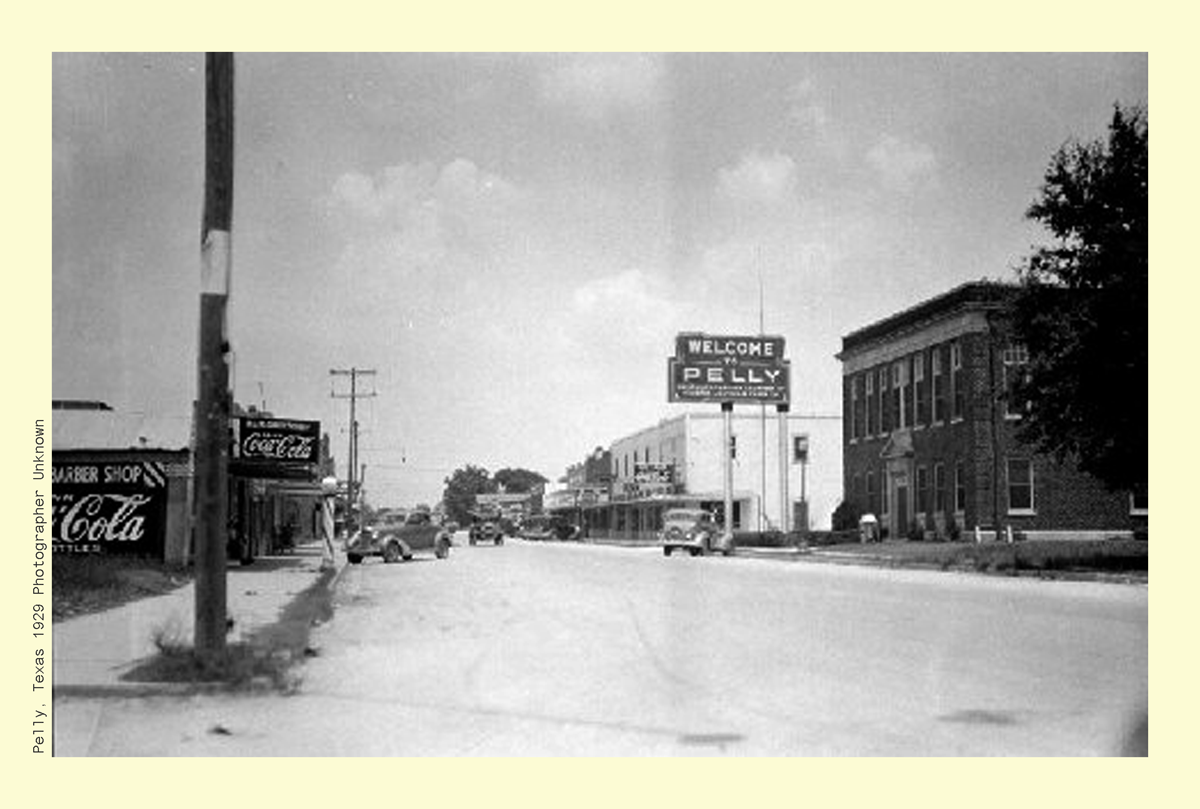
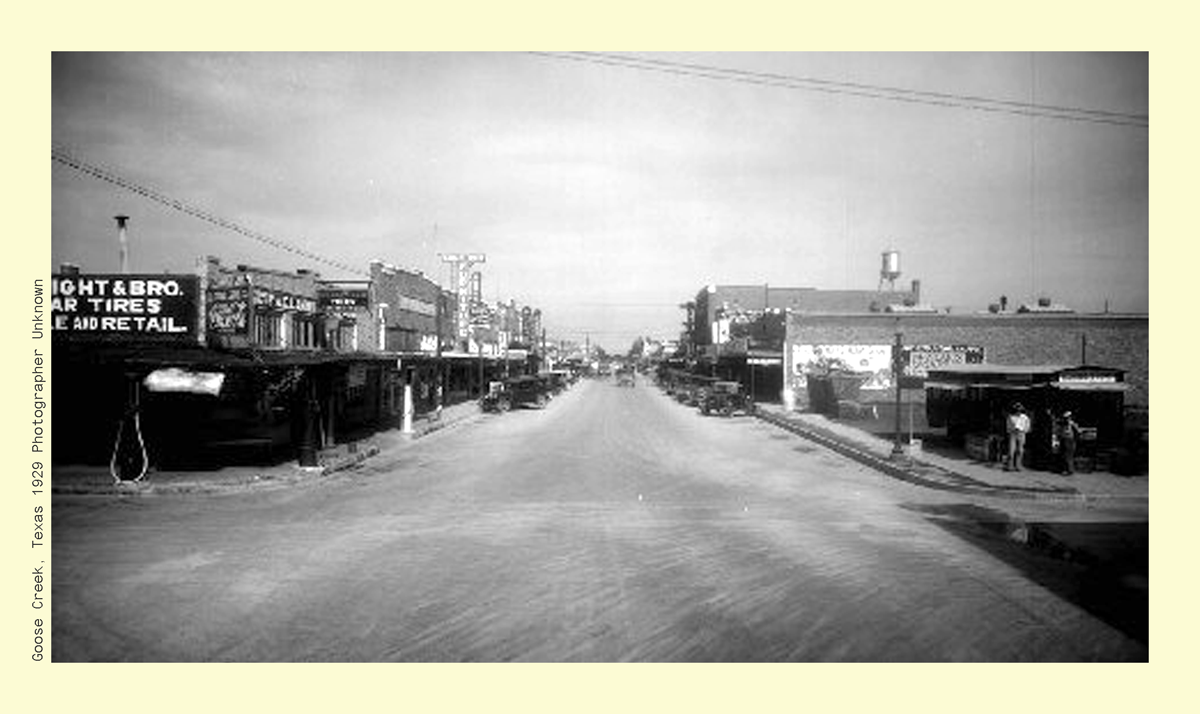
Sixty-nine years ago, Baytown as we now know it was born. Before
World War II, three separate towns developed shoulder-to shoulder-
to-shoulder: Baytown, Goose Creek and Pelly. Before the three
merged, the area was known as the Tri-Cities.
Though most of the people who lived in the Tri-Cities worked for the
same company — Humble Oil — were schooled in the same district —
Goose Creek — and read the same newspaper — the Daily Sun, each
developed its own sense of identity. These identities, attitudes and
political differences stymied annexation efforts that emerged in
1929, 1931 and 1939. World War II, however, changed much of that.
America’s entry into the conflict in 1941 meant a terrific increase
in production at the Humble refinery, which had to expand to handle
it. The Humble plant would produce more 100-octane gasoline for the
allied air forces than any other. Explosives made in Baytown found
their way into a large portion of the bomb tonnage dropped on the
European Theater.
A
General Tire and Rubber Co. plant also set up business in the area
to make rubber for the war effort. Note: This was located on
Barkuloo road. Most of the refinery’s $10 million expansion was
financed by the federal government. That expansion and the new
businesses arriving required more workers. The need for workers was
so great it spurred Humble to embark on an unprecedented recruitment
campaign. The campaign lured an influx of new workers into the
Tri-Cities area, people who arrived without the local pride and
prejudices that colored outlooks here and fueled local politics.
In
December 1945, Pelly adopted a home rule charter and annexed Baytown
that was not only contiguous to Pelly but unincorporated as well.
Interestingly enough, Baytown had twice the population of Pelly. The
three water districts that operated in Baytown opposed the
annexation and took Pelly to court. At the time the central question
was if a city had the right to annex a water district. It had never
happened before. A lower court held in favor of the water districts
as did the Texas court of civil appeals. But when the case went to
the Texas Supreme Court, the lower court findings were reversed, and
Pelly’s action was deemed legal.
The
next step came in February 1947 with a consolidation election held
by the cities of Pelly and Goose Creek. The consolidation forces
carried the day by a large majority. Also a part of that election
was a straw poll that asked people their preferences for the new
city’s name. Though Baytown prevailed, other names considered for
the new city included Gander City, Lee City, Bay View, Port Humble,
San Jacinto, Sterling City, Point Sterling and Sterling Bay. Then
came a new question: Would Pelly (which now included Baytown) take
over Goose Creek, or would Goose Creek swallow Pelly?
Under Texas law, when two cities vote to merge, the larger takes
over the smaller. Pelly, population 11,030, would take in Goose
Creek and its population of 9,928. With that a 15-member commission
wrote a new charter that was approved by voters on Jan. 24, 1948.
The charter provided for a strong city manager form of government,
and the commission hired Bill N. Taylor, an authority on municipal
government, to become Baytown’s first city manager. Pelly’s city
hall building on West Main functioned as the new city’s center of
government until 1963, when the current city hall was constructed.
Baytown’s first mayor was E. D. “Eddie” Cleveland, and the rest,
they say is history. |
Much of the information on this page
comes from the excellent book 'Baytown Vignettes' by John Britt and Muriel
Tyssen, or 'The History of Baytown'
available at Sterling Municipal Library and the Baytown Historical Museum
located at 220 W. Defee.
|